
Summer Hours – Last Entry at 4:30 PM
Office & Museum Shop
Tue – Sun, 10am – 5pm
Self-Guided Exhibits
Tue – Sun, 10am – 5pm
Wilbor House Tours
July & August: Thurs – Sun
Awashonks’ Garden
Free & Open Everyday
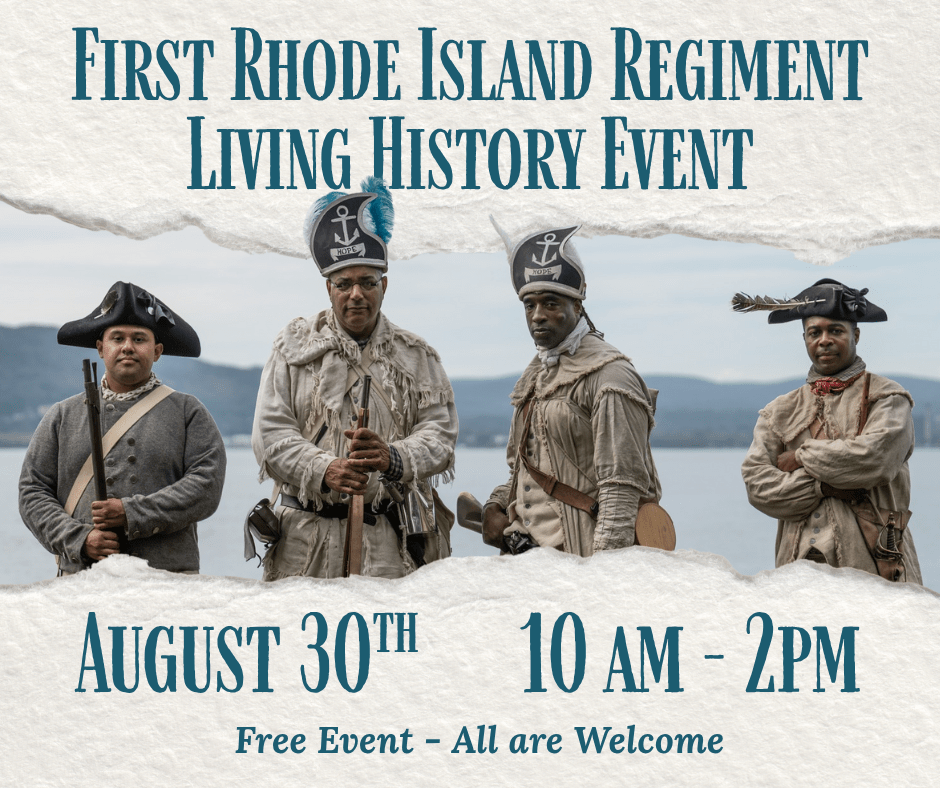
First Rhode Island Regiment Living History Event: Aug. 30th
Join us on August 30th at the Little Compton Historical Society to meet reenactors of the First Rhode Island Regiment as they set up camp on the historical society grounds.
From 10 am to 2 pm, stop by and learn more about the American Revolution and the soldiers of the First Rhode Island Regiment who played an important role in American history.
Bring a picnic and enjoy the historical society grounds! Explore exhibits, try colonial crafts, and visit our new outdoor exhibit “Revolutionary Little Compton,” where you can learn about the impact on Little Compton residents during the Revolutionary War.
On Sale Now

Reconnections: A New History of The Sakonnet Wampanoag People
This is the second volume in our two-volume Reconnections series. Written by a team of five authors, including two local historians, a history and public humanities professor, a Wampanoag educator, and an archaeologist, Reconnections: A New History of the Sakonnet Wampanoag People is a local history that focuses on Sakonnet and the Indigenous people who have lived here for 13,000 years.

Remembering the Revolution: Little Compton, Rhode Island
Imagine being able to hear directly from the men and women who lived through the Revolution. Remembering the Revolution: Little Compton, Rhode Island lets you do that. Listen in on town meetings where discussions let you “know the town’s mind.” Read newspaper reports on spinning matches and tea boycotts. Follow the war through the details of daily life in the army, on board ships, and on the homefront through the detailed, moving letters veterans and their widows wrote as part of their applications for pensions. There were no battles in Little Compton, but the British occupation of Newport meant that no one in town was unaffected by the war.
Live performance of “Remembering the Revolution: In Their Own Words” 2026
Written by Steven Lubar, read by Volunteers, narrated by Marc Anderson, and with music performed by violist Florrie Marshall
This year’s Little Compton Historical Society’s Annual Meeting brings the experiences of the town’s Revolutionary War veterans and their family members to life. “Remembering the Revolution in Little Compton,” is an original spoken word performance written by the Historical Society’s president, Steven Lubar, Professor of History and American Studies.
All of the memories in this performance are taken directly from documents written during the Revolution and the years following and were painstakingly researched by Professor Lubar. Newspaper articles and town council minutes reveal the debates that led up to the War, military records provide details, and the lived experiences of local veterans and their widows are drawn directly from their applications for government pensions. These documents reveal Little Compton’s residents’ many roles during the Revolution, which were often far more harrowing than we once believed.

Explore our new outdoor exhibit!
This summer, we will join the town of Little Compton and the nation as we celebrate and commemorate the United States’ 250th year. Our Revolutionary Little Compton exhibit will be displayed outdoors at the Historical Society and at select sites in the community from July to October. The exhibit banners will feature fascinating, well-researched information exploring the often-harrowing, Revolutionary-era experiences of Little Compton’s men, women, and children and the sacrifices they made for freedom.
Awashonks’ Garden
Free and Open to the Public
Open Every Day from Sunrise to Sunset


Sakonnet Belongings: Wampanoag Art Past & Present
Now Open


You must be logged in to post a comment.